
Country Guide
2026
Wednesday09.09.2026
Beyond
-
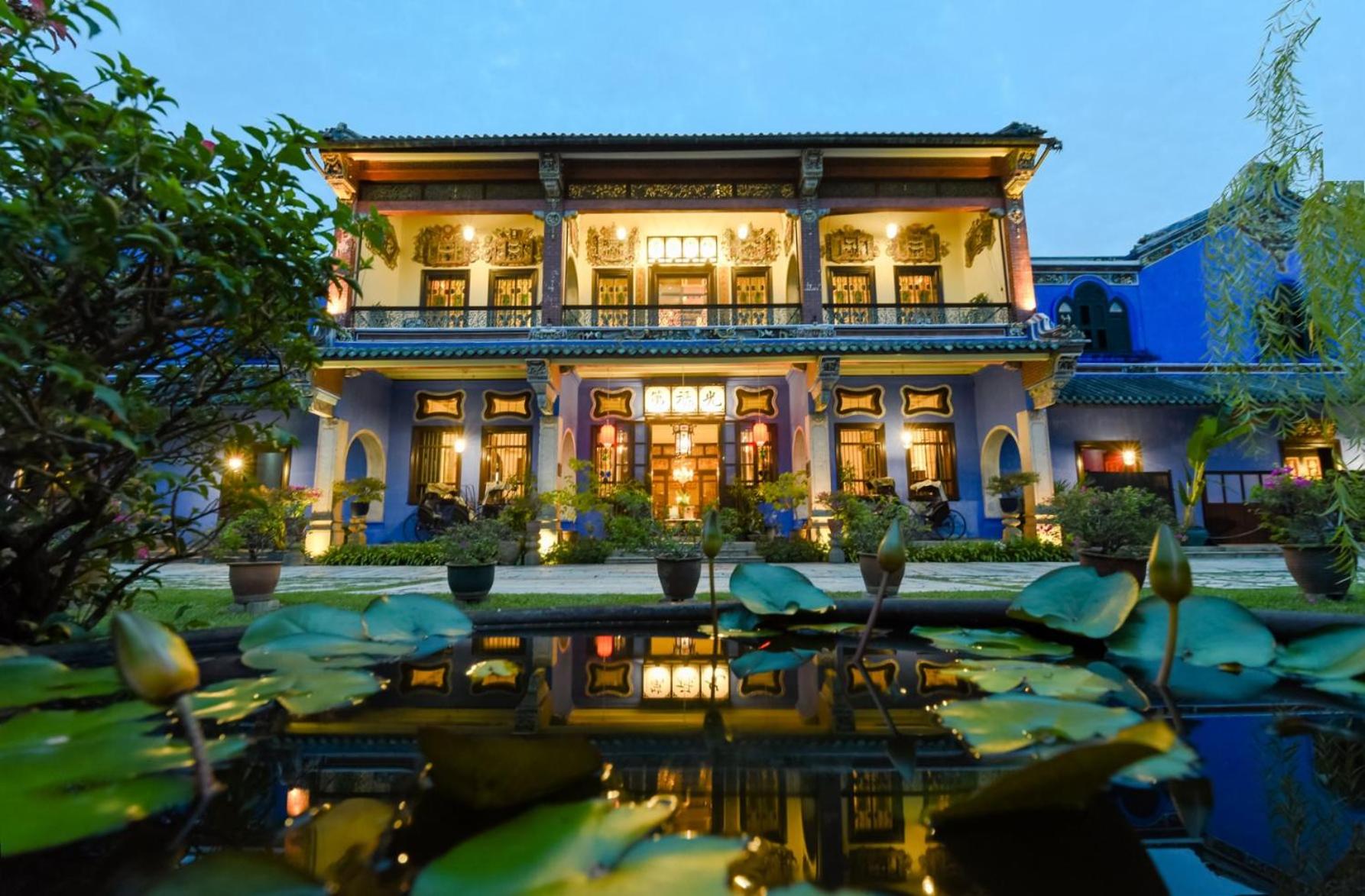
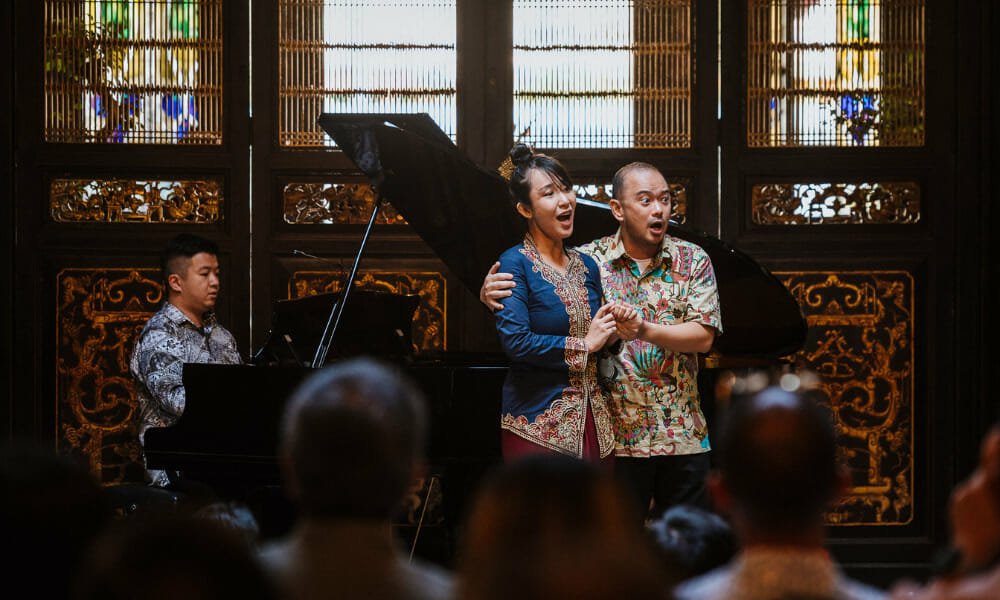
 Wednesday09.09.202619:30Mangga NightsLGBTQIA+ friendlyEnjoy open air live music and tapas at The Blue Mansion in Malaysia
Wednesday16.09.2026
Beyond
- Wednesday09.09.202619:30Mangga NightsLGBTQIA+ friendlyEnjoy open air live music and tapas at The Blue Mansion in Malaysia
Wednesday23.09.2026
Beyond
- Wednesday09.09.202619:30Mangga NightsLGBTQIA+ friendlyEnjoy open air live music and tapas at The Blue Mansion in Malaysia
Wednesday30.09.2026
Beyond
- Wednesday09.09.202619:30Mangga NightsLGBTQIA+ friendlyEnjoy open air live music and tapas at The Blue Mansion in Malaysia
Wednesday07.10.2026
Beyond
- Wednesday09.09.202619:30Mangga NightsLGBTQIA+ friendlyEnjoy open air live music and tapas at The Blue Mansion in Malaysia
Wednesday14.10.2026
Beyond
- Wednesday09.09.202619:30Mangga NightsLGBTQIA+ friendlyEnjoy open air live music and tapas at The Blue Mansion in Malaysia
Wednesday21.10.2026
Beyond
- Wednesday09.09.202619:30Mangga NightsLGBTQIA+ friendlyEnjoy open air live music and tapas at The Blue Mansion in Malaysia
Wednesday28.10.2026
Beyond
- Wednesday09.09.202619:30Mangga NightsLGBTQIA+ friendlyEnjoy open air live music and tapas at The Blue Mansion in Malaysia
Wednesday04.11.2026
Beyond
- Wednesday09.09.202619:30Mangga NightsLGBTQIA+ friendlyEnjoy open air live music and tapas at The Blue Mansion in Malaysia
Wednesday11.11.2026
Beyond
- Wednesday09.09.202619:30Mangga NightsLGBTQIA+ friendlyEnjoy open air live music and tapas at The Blue Mansion in Malaysia
Wednesday18.11.2026
Beyond
- Wednesday09.09.202619:30Mangga NightsLGBTQIA+ friendlyEnjoy open air live music and tapas at The Blue Mansion in Malaysia
Wednesday25.11.2026
Beyond
- Wednesday09.09.202619:30Mangga NightsLGBTQIA+ friendlyEnjoy open air live music and tapas at The Blue Mansion in Malaysia
Wednesday02.12.2026
Beyond
- Wednesday09.09.202619:30Mangga NightsLGBTQIA+ friendlyEnjoy open air live music and tapas at The Blue Mansion in Malaysia
Wednesday09.12.2026
Beyond
- Wednesday09.09.202619:30Mangga NightsLGBTQIA+ friendlyEnjoy open air live music and tapas at The Blue Mansion in Malaysia
Wednesday16.12.2026
Beyond
- Wednesday09.09.202619:30Mangga NightsLGBTQIA+ friendlyEnjoy open air live music and tapas at The Blue Mansion in Malaysia
Wednesday23.12.2026
Beyond
- Wednesday09.09.202619:30Mangga NightsLGBTQIA+ friendlyEnjoy open air live music and tapas at The Blue Mansion in Malaysia
LGBTQ+ Travel Guide: Malaysia
Legal Situation & Safety for LGBTQ+ Travellers
Malaysia operates under a dual legal system. Federal law under the Penal Code — a British colonial-era statute enacted in 1871 and retained after independence — criminalises consensual same-sex conduct. Section 377A defines "carnal intercourse against the order of nature" as the introduction of the penis into the anus or mouth of another person. Section 377B punishes this act with imprisonment of up to 20 years and mandatory caning (whipping). A 2017 amendment made caning mandatory rather than discretionary. Section 377D criminalises "acts of gross indecency with another person" — applicable to both men and women — with up to two years in prison. These provisions apply to all persons in Malaysia regardless of religion or nationality, including foreign tourists. In parallel, all 13 Malaysian states and the federal territories have enacted Sharia criminal codes applicable exclusively to Muslim citizens. State Sharia law criminalises both same-sex sexual activity and gender nonconformity (including cross-dressing). The maximum sentence Sharia courts can impose under the Syariah Courts (Criminal Jurisdiction) Act 1965 is three years in prison, fines of up to RM 5,000, and six strokes of the cane — and all three may be combined. In September 2018, two Muslim women were publicly caned six times by the Terengganu Sharia High Court for attempted lesbian sex in a car — the first such sentence carried out in public in years and one that drew global criticism. In November 2019, five Muslim men in Selangor received fines, imprisonment, and caning for "attempting" gay sex. In February 2021, Malaysia's Federal Court delivered a partial landmark ruling in a case involving a gay man prosecuted under Selangor's Sharia law: the court found the state law invalid on constitutional "preclusion" grounds because it duplicated the federal Penal Code, creating a temporary stay on similar state-level Sharia prosecutions. Critics noted the ruling did not strike down Section 377 itself — it simply affirmed that federal criminal law takes precedence over state law on the same conduct. There are no LGBTQ+ anti-discrimination protections in Malaysia. No hate crime law protects LGBTQ+ people. No recognition of same-sex relationships exists in any form.
Overview of Legal Rights (Sources: Wikipedia, Human Rights Watch, Equaldex, Human Dignity Trust, ILGA Asia)
| Topic | Status |
|---|---|
| Homosexuality (federal law) | Criminalised — Section 377A and 377B of the Penal Code: up to 20 years imprisonment and mandatory caning for "carnal intercourse against the order of nature"; Section 377D: up to 2 years for "gross indecency"; applicable to all persons in Malaysia including foreign tourists regardless of religion |
| Homosexuality (Sharia law — Muslims only) | Criminalised in all 13 states and federal territories — applicable exclusively to Muslim citizens; maximum under Sharia courts: 3 years prison, RM 5,000 fine, 6 strokes caning (or all three); prosecutions of both men and women documented; public caning sentence carried out in 2018 (Terengganu); five men caned in Selangor 2019; non-Muslims are not subject to Sharia law |
| Same-sex marriage / civil partnerships | Not recognised in any form — no legal pathway exists; March 2024 Home Minister stated Malaysia "does not recognise any LGBTQ lifestyle" |
| Gender nonconformity / cross-dressing | Criminalised under Sharia law — applicable to Muslim citizens in all states; all 13 states have enacted Sharia provisions against cross-dressing since Kelantan's first provision in 1985; transgender women are routinely harassed, arrested, and prosecuted; a 2011 Court of Appeal ruling found such provisions unconstitutional, but was overturned by the Federal Court in 2015 on a procedural technicality |
| Legal gender recognition | Not available — the National Registration Department consistently refuses to allow gender marker changes; fatwas (religious edicts) from the National Fatwa Council carry weight in government policy on this issue; self-determined gender recognition does not exist |
| Anti-discrimination protections | None — no national law protects LGBTQ+ people against discrimination in employment, housing, or services; Human Rights Watch (2015): "Discrimination against lesbian, gay, bisexual, and transgender people is pervasive in Malaysia" |
| Media and online censorship | Active and expanding — 1994: government banned LGBTQ+ persons from appearing in state-controlled media; the Printing Presses and Publications Act 1984 has been used to ban LGBTQ+ publications (including the book "Gay Is OK!" in 2020, later overturned in court); May 2023: 172 Swatch Pride collection watches seized from shopping malls (seizure later declared illegal by KL High Court and watches returned Dec 2024); since 2018: LGBTQ+ websites and foreign LGBTQ+ media content systematically blocked; February 25, 2026: MCMC blocked access to the websites of Grindr and Blued, and is pursuing legal measures to restrict the apps from Google Play and Apple App Store; government has declared intent to extend restrictions to other LGBTQ+ dating apps |
| Conversion practices | State-funded — the government funds and promotes "conversion" or "rehabilitation" programmes; HRW documented conversion practices in its 2022 report "I Don't Want to Change Myself"; these practices are mandated rather than banned |
| Enforcement intensity (2024–2026) | Escalating — November 28, 2024: 203 men arrested in KL men's health centre (largest gay space raid since 2022); detainees denied food and water for 40+ hours; faces and personal details leaked to media and social media; 17 civil servants suspended; June 2025: 20 men arrested in Kelantan including at an HIV health event sanctioned by Ministry of Health (condoms and HIV medication treated as evidence); February 2026: Grindr and Blued websites blocked; March 2026: MCMC pursuing further app store restrictions; June 2025: investigation opened into closed-door LGBTQ sexual health workshop in Selangor |
The Dual Legal System: What This Means for Travellers
Non-Muslim travellers are not subject to Malaysia's Sharia law — Islamic courts have no jurisdiction over non-Muslims, as enshrined in the Federal Constitution. However, non-Muslims are fully subject to the federal Penal Code, including Section 377 provisions. In practice, enforcement of the Penal Code against tourists has historically been rare; Section 377 prosecutions of non-Malays and foreigners are uncommon in ordinary circumstances. The more immediate practical risks for foreign LGBTQ+ tourists are: police raids on LGBTQ+ venues and gatherings (which do not distinguish by religion or nationality of attendees), detention for extended periods even where prosecution does not follow, media exposure with personal details, and the general atmosphere of hostility and surveillance that has intensified under the current government. The 203 men arrested in November 2024 included 24 foreigners — all were eventually released as courts could find no evidence of exploited or coerced "prostitution or abnormal sexual activity", but they spent over 40 hours in detention without adequate food, water, or medical access.
Anwar Ibrahim: Context and Contradiction
Prime Minister Anwar Ibrahim — in office since November 2022 — presents one of the most complex figures in Malaysian LGBTQ+ politics. He was himself charged and twice imprisoned under Section 377 in politically motivated prosecutions widely condemned as unjust (1998 and 2015 convictions, both overturned or pardoned). Many international observers and some Malaysian LGBTQ+ activists initially hoped his government would moderate enforcement. The opposite has occurred. Enforcement has intensified markedly since 2022. In March 2024, Anwar's Home Minister declared Malaysia "does not recognize any LGBTQ lifestyle." The government has maintained bans on LGBTQ+-themed films, continued Sharia prosecutions, and failed to condemn the November 2024 mass raid. Activists widely attribute at least some enforcement to political calculation — deploying LGBTQ+ crackdowns to signal religious conservative credentials and deflect from other political pressures. His silence on the November 2024 raid has been noted by HRW and domestic civil society organisations.
Key Civil Society Organisations
- Justice for Sisters: Malaysia's principal trans rights and LGBTQ+ legal advocacy organisation; provides legal referrals, court monitoring, emergency support, and documents abuses; led legal assistance coordination following the November 2024 KL raid; justiceforsisters.org
- Pelangi Campaign: LGBTQ+ rights organisation based in Kuala Lumpur; advocacy and community support
- People Like Us Hang Out (PLUHO): Community organisation and advocacy group for queer men; active in responding to the November 2024 KL raid
- ILGA Asia: Regional LGBTQ+ rights organisation that has condemned Malaysian enforcement operations; ilgaasia.org
- Emergency: 999 (Police) / 994 (Ambulance)
Malaysia as a Travel Destination: Context for LGBTQ+ Visitors
Malaysia is a country of extraordinary variety — a federation of peninsular states and the Borneo states of Sabah and Sarawak, spanning tropical rainforests, pristine island beaches, colonial hill stations, world-class street food cities, and some of the most biodiverse rainforest on earth. Kuala Lumpur is a genuinely dynamic global city with a spectacular skyline. George Town (Penang) is a UNESCO-listed city with one of Asia's finest culinary and heritage cultures. The question for LGBTQ+ travellers is not whether Malaysia is worth visiting as a destination — it emphatically is — but how to navigate it safely given the current enforcement environment.
The practical reality for many LGBTQ+ tourists, particularly non-Muslim foreign tourists who travel discreetly, is that they visit Malaysia without incident. Kuala Lumpur has historically had a partially underground LGBTQ+ scene, with certain bars, venues, and social networks known to the community. However, the escalating crackdown since 2022, the mass arrests in late 2024, and the active blocking of LGBTQ+ digital platforms as of early 2026 represent genuine and worsening risks. The Kelantan region and other conservative-majority states should be treated as particularly high-risk environments.
Kuala Lumpur — Capital and Most Cosmopolitan City
Kuala Lumpur (KL) is Malaysia's cosmopolitan capital — a city of 1.8 million in the metropolitan area, with the iconic Petronas Twin Towers, a world-class street food culture, a distinctive blend of Malay, Chinese, and Indian influences, and a historically more tolerant atmosphere than other Malaysian cities. The UK government's Country Policy Note (2024) states that KL is "generally more cosmopolitan and accepting of gender diversity than other Malaysian states" and that no arrests of LGBTQ+ persons under Sharia law in the Federal Territory of KL were found in a study of 2018–2020 media reporting. However, the November 2024 mass raid — which took place in KL's Chow Kit neighbourhood — directly contradicts the idea that KL offers meaningful safety for LGBTQ+ venues. Media outlets were tipped off ahead of the raid, footage of arrests was shared by state TV, and personal details of detainees were leaked online. The most famous LGBTQ+-associated areas and the city's historical underground queer scene must now be considered high-risk.
- Petronas Twin Towers and KLCC: The defining image of modern Malaysia — the 452-metre twin towers are among the world's most recognised buildings; the surrounding KLCC park and mall are open to all visitors
- Batu Caves: A dramatic Hindu temple complex inside a limestone hill 13 km north of KL — 272 colourfully painted steps lead to the main cave temple; one of Malaysia's most visited sites
- Central Market (Pasar Seni): KL's historic covered market — arts, crafts, batik, silver, and Malaysian cultural goods; walking distance from Chinatown
- Chinatown (Petaling Street): KL's Chinese quarter — night markets, street food, kopitiam coffee shops, traditional medicine, and chaotic retail; one of the best places in the city for food
- Bukit Bintang: KL's main shopping and entertainment district — malls, street food on Jalan Alor (one of Southeast Asia's great outdoor eating streets), rooftop bars, and the city's most internationally oriented nightlife; historically the most LGBTQ+-frequented area, though all venues now require significant discretion
- Bangsar: An upscale neighbourhood with restaurants, bars, and cafes popular with KL's expatriate and professional communities; regarded as somewhat more liberal in atmosphere
- Islamic Arts Museum Malaysia: One of the world's finest museums of Islamic art and design — extraordinary collection of architecture, manuscripts, textiles, ceramics, and jewellery from across the Muslim world; world-class
- National Museum (Muzium Negara): Malaysia's principal national history museum — covers pre-colonial kingdoms, the colonial period, independence (1957), and the formation of Malaysia (1963)
George Town, Penang — UNESCO Heritage City and Food Capital
George Town, on the island of Penang (Pulau Pinang), is Malaysia's second most important city and one of Southeast Asia's great travel destinations. A UNESCO World Heritage Site since 2008 for its multicultural trading port heritage, George Town's historic inner city contains an extraordinary concentration of Chinese shophouses, colonial government buildings, Hindu temples, mosques, Chinese clan houses, and street art. Its food scene is widely regarded as the finest in Malaysia and among the finest in all of Asia — a result of the Malay, Nyonya (Peranakan Chinese), Indian Tamil, and colonial British culinary traditions that converged on this trading port. Penang's population is plurality Chinese (approximately 45%), making it culturally distinct from the rest of Malaysia. The atmosphere is somewhat more relaxed than other Malaysian states, though the legal environment is identical: Penang state Sharia criminal law carries the same penalties as elsewhere, and federal Penal Code provisions apply to all visitors. LGBTQ+ Penang visitors should exercise the same discretion as in KL and be aware that the Penang Sharia code explicitly criminalises lesbian relations (Musahaqat) as well as sodomy (Liwat).
- George Town Heritage Zone (UNESCO): The extraordinary streetscape of ethnic clan temples, colonial administrative buildings, mosques, and shophouses; much of the best-preserved colonial-era urban fabric in Southeast Asia
- Penang Street Art: A celebrated programme of murals and iron rod sculptures throughout the heritage city — the steel rod bicycles and other sculptures by Lithuanian artist Ernest Zacharevic have become iconic images of contemporary George Town
- Clan Jetties: The last surviving community of clan water villages on Penang Harbour — wooden homes on stilts over the sea, each associated with a specific Chinese clan (Chew, Lim, Tan, Lee, etc.)
- Penang Hill (Bukit Bendera): A funicular railway takes visitors to the 833-metre summit of Penang Hill — colonial bungalows, cool air, views across the island and mainland, and the extraordinary Habitat eco-park
- Kek Lok Si Temple: Southeast Asia's largest Buddhist temple — a complex of temples, statues, and gardens on the hillside at Air Itam; particularly spectacular during Chinese New Year
- Hawker food culture: George Town's street food is the primary reason many visitors come to Penang at all — Asam laksa (a sour fish and tamarind noodle soup, listed on CNN's 50 Best Foods in the World), char kway teow (wok-fried rice noodles), hokkien mee, cendol, and the Penang Nyonya cuisine (a distinctive Peranakan Chinese-Malay fusion tradition) are all at their finest here
Malaysian Borneo: Sabah and Sarawak
Malaysian Borneo — the states of Sabah and Sarawak — is one of the most extraordinary natural environments on earth. The legal environment is the same as Peninsular Malaysia (federal Penal Code and state Sharia law apply), but the cultural environment in parts of Borneo is distinctly different: Sabah and Sarawak have large non-Muslim indigenous and Christian populations, and the atmosphere in cities like Kota Kinabalu (Sabah's capital) and Kuching (Sarawak's capital) is widely described as more relaxed than conservative Peninsular states. The Sabah state government was involved in a significant political controversy in late 2024 involving PM Anwar Ibrahim (a mining corruption scandal), which partly contextualised the November 2024 Chow Kit raid for some analysts. LGBTQ+ travellers should exercise the same legal caution as anywhere else in Malaysia.
- Kinabalu Park (UNESCO, Sabah): Home to Mount Kinabalu (4,095 m) — the highest peak in Southeast Asia and the highest mountain between the Himalayas and New Guinea; a UNESCO World Heritage Site for its extraordinary botanical biodiversity; a challenging but non-technical summit climb operated with permits and overnight mountain huts; one of the great hiking destinations in Asia
- Sepilok Orangutan Rehabilitation Centre (Sabah): One of the world's few places where rehabilitated orangutans can be observed up close at twice-daily feedings; the adjacent Bornean Sun Bear Conservation Centre is the world's only sun bear rehabilitation facility; together one of the most compelling wildlife experiences in Asia
- Kinabatangan River (Sabah): One of the highest densities of wildlife in Borneo — proboscis monkeys, pygmy elephants, crocodiles, hornbills, and orangutans visible from river boat tours along this UNESCO-aspirant corridor of forest
- Mulu National Park (UNESCO, Sarawak): Home to the world's largest cave chamber (Sarawak Chamber), the Deer Cave with its nightly bat exodus of millions of bats, and the extraordinary cave ecosystems of Gunung Mulu; accessible by small plane from Miri or Kota Kinabalu
- Kuching (Sarawak): Sarawak's capital — one of Malaysia's most likeable and atmospheric cities; the Waterfront, the Old Courthouse complex, the Sarawak Museum (one of Asia's finest ethnographic museums), the Central Market, and the food culture of Kolo mee and Sarawak laksa; widely regarded as among the most LGBTQ+-relaxed environments in Malaysia within the constraints of existing law
- Sipadan Island (Sabah): Consistently ranked among the world's top five dive sites — a volcanic pinnacle rising 600 metres from the Celebes Sea floor, surrounded by abundant turtles, reef sharks, hammerheads, barracuda tornadoes, and extraordinary coral; access is strictly controlled with daily dive permits (very limited; book months in advance)
Travel Practicalities
Entry and Visa
Malaysia is a member of ASEAN. EU citizens, UK citizens, US citizens, Australians, Canadians, and most Western nationalities may enter visa-free for up to 90 days (30 days for some nationalities — verify before travel). Ensure your passport is valid for at least six months beyond your arrival date. Malaysia is not in the Schengen Area. No HIV travel restriction exists. The currency is the Malaysian Ringgit (MYR / RM). The official language is Malay (Bahasa Malaysia); English is widely spoken, particularly in urban areas, among the Chinese community, and in the tourism industry. The country drives on the left.
Digital Safety (Updated March 2026)
As of February 25, 2026, Malaysia has blocked access to the websites of Grindr and Blued. The Malaysian Communications and Multimedia Commission (MCMC) is actively pursuing legal measures to restrict these apps from Google Play and Apple App Store and has indicated it may extend restrictions to other LGBTQ+ dating apps. LGBTQ+ websites have been systematically blocked since 2018. The Washington Blade reported in March 2026 that activists note enforcement agencies have been known to monitor LGBTQ+ apps and platforms as part of enforcement operations. LGBTQ+ travellers should be aware that phone contents and app histories have been examined during police detentions — this was documented in the November 2024 Chow Kit raid. Use of a VPN for internet access is legal in Malaysia; using a VPN to access blocked content is a grey area but widely practised.
Notable Context: The 1975 Concert Incident (2023)
In July 2023, British pop-rock band The 1975 were performing at the Good Vibes Festival in Kuala Lumpur when lead vocalist Matty Healy kissed bandmate Ross MacDonald on stage and criticised Malaysia's anti-LGBTQ+ laws. The performance was stopped mid-set and the band was subsequently banned from performing in Malaysia. The three-day festival was cancelled entirely. The incident generated global media coverage and renewed international attention to Malaysia's LGBTQ+ legal environment. While the incident provoked some public debate in Malaysia about the country's international image, the government's response was to enforce the ban on LGBTQ+ themes in public performances. No policy change resulted.
Sources: Wikipedia – LGBTQ rights in Malaysia · Human Rights Watch – World Report 2025: Malaysia; "I Don't Want to Change Myself" (2022); Malaysia: Government Steps Up Attacks on LGBT People (2021) · Human Dignity Trust – Criminalisation of LGBT People in Malaysia · Equaldex – LGBT Rights in Malaysia · ILGA Asia – Malaysia Briefing Note 2025 · The Diplomat – Sauna Raid Highlights Growing Restrictions (December 2025) · Washington Blade – Malaysia blocks access to Grindr, other gay dating websites (March 12, 2026) · Metro Weekly – Malaysia Blocks Access to LGBTQ Dating Apps Grindr and Blued (March 1, 2026) · Bloomberg – Malaysia Blocks Grindr, Blued (February 25, 2026) · Pink News – Malaysia blocks Grindr and Blued (February 25, 2026) · South China Morning Post – Raids on men-only spas in Malaysia (December 2025) · UK Home Office – Country Policy and Information Note: Malaysia (2024) · LGBTQ Nation – multiple reports 2025–2026 · As of March 2026. Note: The enforcement environment is actively evolving — check current travel advisories before visiting.
Change location: