
Country Guide

September 2026
Friday04.09.2026
Kink & Fetish
-
 Friday04.09.202620:00CAPTAINS OF THE SEAMen OnlyNautical themed party night with live entertainment at Gigolo Erotic House in Colombia

Saturday05.09.2026
Kink & Fetish
- Saturday05.09.20260:00NAKED YOGAMen OnlyParticipate in a unique naked yoga session at this club in Colombia
- Saturday05.09.20260:00MINIMEGA BBKMen OnlyAttend the Minimega BBK event at Angel's Naked Party in Colombia
- Saturday05.09.202620:00WHITE PARTYMen OnlyExperience a white themed party with live shows in Colombia

Wednesday09.09.2026
Kink & Fetish
- Wednesday09.09.20260:00MINISMen OnlyExperience a unique themed event at the Angel's Naked Party venue in Colombia
Saturday12.09.2026
Kink & Fetish
- Saturday12.09.20260:00WOLF LOVE MEGAORGYMen OnlyJoin the Wolf Love Megaorgy event at Angel's Naked Party in Colombia
Wednesday16.09.2026
Kink & Fetish
- Wednesday16.09.20260:00LEATHER MINISMen OnlyDiscover the LEATHER MINIS event at Angel's Naked Party in Colombia
Friday18.09.2026
Kink & Fetish
- Friday18.09.20260:00MINIMEGA VIERGONESMen OnlyExperience a unique party night at Angel's Naked Party in Colombia
Saturday19.09.2026
Kink & Fetish
- Saturday19.09.20260:00MINIMEGAMen OnlyDiscover the MINIMEGA event at Angel's Naked Party in Colombia
Wednesday23.09.2026
Kink & Fetish
- Wednesday23.09.20260:00PANA MINISMen OnlyExperience a unique social event at Angel's Naked Party in Colombia
Saturday26.09.2026
Kink & Fetish
- Saturday26.09.20260:00JUNIOR MEGAORGYMen OnlyJoin the intense JUNIOR MEGAORGY event at Angel's Naked Party in Colombia
Wednesday30.09.2026
Kink & Fetish
- Wednesday30.09.20260:00BBK MINISMen OnlyCheck out the BBK MINIS event at Angel's Naked Party in Colombia
LGBTQ+ Travel Guide: Colombia
Legal Situation & Safety for LGBTQ+ Travellers
Colombia's LGBTQ+ legal framework is largely a product of Constitutional Court jurisprudence rather than legislative action — a distinction with practical consequences, as enforcement remains inconsistent. Homosexuality was decriminalised in 1980. Same-sex marriage was legalised by the Constitutional Court on 28 April 2016 (making Colombia the fourth country in Latin America to do so), with the first same-sex wedding occurring in Cali on 24 May 2016. Same-sex couples have had equal adoption rights since 2015. Legal gender change by self-declaration (no surgery required) has been available since 2015. Non-binary gender recognition on official documents was established by the Constitutional Court in March 2022. The 2016 peace accord with FARC explicitly addressed LGBTQ+ rights — a world first. In 2024, Colombia launched CONPES 4147, a national policy framework for LGBTQ+ rights. Despite all this, 45 LGBTQ+ homicides were reported by mid-2025, the IACHR has expressed deep concern, and a UN expert described in May 2025 Colombia's "persistent gap between constitutional aspirations and lived realities."
Overview of Legal Rights (Sources: Equaldex, Wikipedia, OutRight International)
| Topic | Status |
|---|---|
| Homosexuality | Legal since 1980 — equal age of consent (14) |
| Same-sex marriage | Legal since 28 April 2016 (Constitutional Court, 6–3 ruling) — Colombia was the 4th country in Latin America; Civil Code updated to reflect this in 2025 |
| Same-sex adoption | Legal since 2015 (Constitutional Court ruling) — same rights as opposite-sex couples |
| Anti-discrimination protections | Law 1482 (2011) criminalises discrimination based on sexual orientation; Article 134A of the Criminal Code applies; National Police Code includes penalties for gender-based discrimination. Enforcement remains inconsistent. |
| Hate crime protections | Legal protections exist; in practice, hate crimes are widely under-investigated and perpetrators rarely prosecuted. IACHR and UN have expressed concern about impunity. |
| Right to change legal gender | Legal since 2015 — self-declaration for adults over 18; no surgery or medical certification required; decree signed by Ministry of Justice and Ministry of Interior |
| Non-binary recognition | Recognised on official documents since March 2022 (Constitutional Court ruling) — a third-gender classification available for non-binary individuals |
| Censorship of LGBTQ+ topics | None — no laws restrict discussion, promotion, or teaching of LGBTQ+ topics |
| Conversion therapy | Not banned at national level |
| First openly gay mayor of a capital city in Latin America | Bogotá — Gustavo Petro's ally Claudia López served as Mayor of Bogotá 2020–2023, the first openly lesbian mayor of any Latin American capital |
Safety & Social Attitudes
The safety picture for LGBTQ+ travellers depends heavily on location. Bogotá's Chapinero neighbourhood is a genuinely open, cosmopolitan queer space where same-sex couples are visible and celebrated. Medellín's El Poblado and Parque Lleras area are similarly welcoming in tourist zones. Cali and Cartagena have more limited but functional scenes. Outside the major cities and tourist areas, attitudes become significantly more conservative — particularly in Antioquia (including parts of the Medellín urban periphery) and the Caribbean and Pacific coastal regions, where armed groups operate and conservative social attitudes dominate. Bogotá elected the first openly lesbian mayor of any Latin American capital in 2020 (Claudia López, 2020–2023) — a powerful symbol of the city's progressive orientation.
Key Organisations & Support
- Colombia Diversa: Bogotá-based LGBTQ+ human rights organisation — legal advocacy, documentation of human rights violations, and policy work; addressed the UN Security Council in 2024
- Caribe Afirmativo: Organisation focused on LGBTQ+ rights in the Caribbean coastal region — monitors and responds to armed group violence against LGBTQ+ communities
- Santamaría Fundación: Medellín-based LGBTQ+ foundation providing social and health services
- Out in Colombia: LGBTQ+-run travel operator offering tours and itineraries specifically designed for queer travellers, based in Colombia
- Emergency: 123 (Police / Emergency — national) / 112 (general emergency)
Entry & Practical Information
- Citizens of most EU countries, the UK, USA, Canada, Australia, and many other nationalities can enter Colombia visa-free for up to 90 days (extendable to 180 days in a calendar year). Check current requirements for your nationality.
- The currency is the Colombian Peso (COP). Card payments (Visa and Mastercard) are widely accepted in cities and tourist areas; carry cash for markets, smaller towns, and taxis. ATMs are available throughout the country.
- The official language is Spanish. English is spoken in tourist areas and upmarket hotels in Bogotá, Medellín, and Cartagena; limited elsewhere. Basic Spanish is very helpful.
- Colombia sits on the equator — altitude rather than season defines temperature. Bogotá (2,600 m) has a cool, spring-like climate year-round; Medellín (1,500 m) enjoys its "eternal spring" reputation; Cartagena and coastal cities are hot and tropical.
- General safety advice: use Uber or InDriver rather than street taxis; avoid displaying expensive items; research neighbourhood safety before choosing accommodation; be aware of "scopolamine" drugging risk in nightlife areas — accept drinks only from bar staff.
LGBTQ+ Highlights: Cities, Prides & Events
Colombia's major cities offer some of Latin America's most vibrant LGBTQ+ scenes. Bogotá is home to Theatron — widely considered the world's largest gay club — while Medellín's rapid transformation has produced a lively and welcoming scene centred on Parque Lleras and the Provenza area.
Bogotá — Latin America's Queer Capital
Bogotá is Colombia's sprawling capital (8+ million people) — a city of remarkable cultural energy, altitude-tinged freshness, and the most developed LGBTQ+ infrastructure in Latin America. The Chapinero neighbourhood is the heart of Colombia's queer scene — home to more gay bars and venues than anywhere else in the country, and a neighbourhood where same-sex couples are fully visible and at ease.
- Chapinero: Bogotá's historic gay neighbourhood — a dense cluster of gay bars, clubs, restaurants, saunas, and community spaces; one of the most vibrant LGBTQ+ neighbourhoods in Latin America; safe, welcoming, and busy day and night
- Theatron de Bolsillo / Theatron: Reputedly the world's largest gay club — a labyrinthine complex with 13 different dance floors, each with its own music style; an institution of Latin American gay nightlife that genuinely has to be experienced to be believed; open Thursdays to Sundays
- La Candelaria & LGBTQ+ art: Bogotá's historic centre has developed a growing queer arts scene with galleries showcasing local queer artists — an emerging cultural presence alongside the traditional colonial architecture
- Bogotá was the first Latin American capital to elect an openly LGBTQ+ mayor — Claudia López served as mayor 2020–2023, the first openly lesbian leader of any Latin American capital city
Medellín — City of Eternal Spring
Medellín is one of the world's great urban transformation stories — from the world's most dangerous city in the early 1990s to a globally celebrated model of urban innovation and design. For LGBTQ+ visitors, it offers a vibrant scene particularly in the El Poblado and Laureles areas, a stunning setting in the Andes foothills, and a warmer climate than Bogotá. The contrast between Medellín's progressive tourism image and the violence that LGBTQ+ Colombians face in the city's peripheral areas is sharp — this city lives its contradictions more intensely than most.
- El Poblado / Parque Lleras: Medellín's most upmarket and tourist-friendly area — Parque Lleras and the surrounding streets are home to gay-friendly bars, restaurants, and nightlife; a relaxed atmosphere where same-sex couples are visible; the main hub for both LGBTQ+ visitors and younger local queer Medellínenses
- Provenza area: The hip, bohemian strip of El Poblado — cafés, boutiques, gay-friendly restaurants; a daytime and early evening scene popular with a younger, more creative crowd
- Oráculo / Bar Chiquita and others: Medellín's gay clubs are centred around El Poblado and include large club nights popular with both locals and international visitors
- Medellín's urban cable cars, the Botero sculptures in Plaza Botero, and the city's acclaimed museum and arts scene complement any queer visit
More Cities & Events
- Cali: Colombia's salsa capital — a vibrant, hot, and musical city with a growing LGBTQ+ scene; the first same-sex wedding in Colombia took place in Cali in May 2016; the Juanchito salsa district offers some of the most extraordinary dancing in the world in a generally welcoming atmosphere
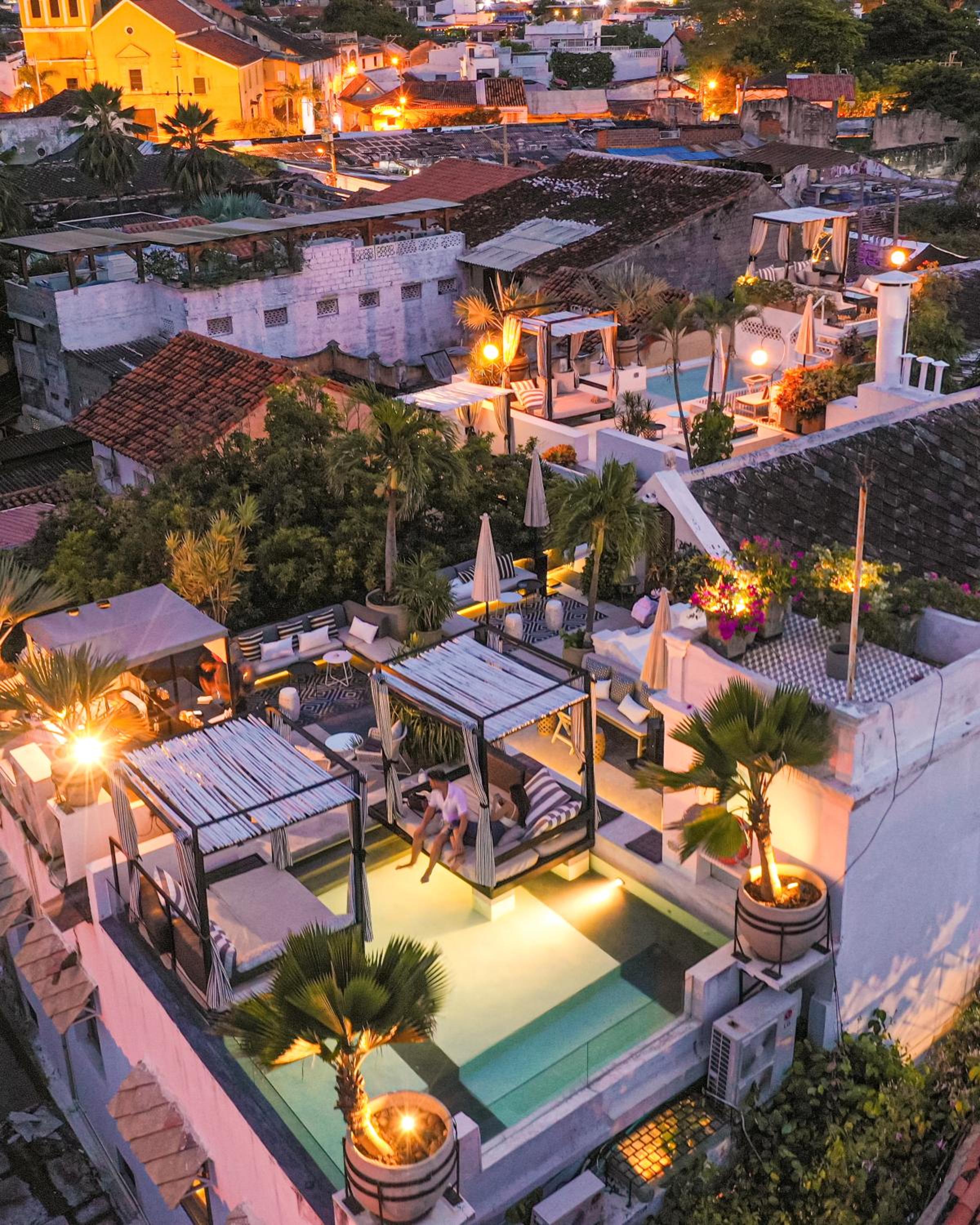
- Cartagena: Colombia's iconic walled colonial city on the Caribbean coast — a major tourist destination with stunning architecture; LGBTQ+ visitors are generally well-received in the tourist areas of the Old City (Centro Histórico) and Getsemaní; an important caveat is that the wider Caribbean region has significant violence against LGBTQ+ people
- Santa Marta & Tayrona: Gateway to the Sierra Nevada mountains and the extraordinary Tayrona National Park; Santa Marta has a small LGBTQ+ scene and a generally tolerant tourist atmosphere
General Travel Highlights: Colombia
Colombia is one of the most biodiverse, culturally rich, and geographically diverse countries in the world — encompassing Caribbean and Pacific coasts, Andean mountain ranges, Amazon rainforest, and some of Latin America's most vibrant cities. Its reputation as a travel destination has been transformed over the past two decades.
Bogotá — High-Altitude Metropolis
- La Candelaria (historic centre): Bogotá's colonial heart — cobblestone streets, the stunning Gold Museum (Museo del Oro) with the world's largest collection of pre-Columbian gold, the Botero Museum (featuring Fernando Botero's voluminous figures), and the 17th-century Primatial Cathedral of Bogotá
- Cerro de Monserrate: The mountain overlooking Bogotá at 3,152 m — accessible by cable car or funicular, offering panoramic views over the city and the Andes; a pilgrim site with a 17th-century church at the summit
- Usaquén: Bogotá's charming northern neighbourhood — colonial houses turned into restaurants and galleries, a Sunday antiques market, and a relaxed café culture
- Zona Rosa & Parque de la 93: Bogotá's upmarket dining and nightlife districts — world-class restaurants, bars, and the starting point for many evenings in the capital
- Salt Cathedral of Zipaquirá: One of Colombia's most extraordinary attractions — a working Roman Catholic cathedral built 200 m underground within a salt mine; stunning sacred architecture in a surreal subterranean setting; 45 minutes from Bogotá
Medellín — Innovation and Coffee
- Urban cable cars & escalators: Medellín's iconic social urbanism — the Metrocable system connects hillside comunas to the city centre, transforming once-isolated neighbourhoods; the outdoor escalators of Comuna 13 turned a former conflict zone into a thriving arts district covered in murals
- Plaza Botero: A public square in the city centre featuring 23 bronze sculptures by Colombia's greatest artist, Fernando Botero — his characteristically voluminous figures are instantly recognisable; the adjacent Museo de Antioquia houses the largest public collection of Botero's work
- Jardín Botánico: Medellín's beautiful botanical garden and the adjacent Parque Explora science museum — a green oasis in the urban fabric, popular with locals at weekends
- Coffee region (Eje Cafetero): The lush green hills of Colombia's coffee heartland — between Medellín and Bogotá — offer hacienda stays, coffee farm tours, and the extraordinary landscape of UNESCO-listed coffee cultural landscapes; towns like Salento and Jardín are among Colombia's most beautiful
The Coast, Nature and More
- Cartagena: Colombia's most visited city — a UNESCO-listed walled city of pastel colonial mansions, flower-draped balconies, and fortress walls above the Caribbean; one of Latin America's most photogenic cities
- Tayrona National Park: Colombia's most iconic natural park — jungle-backed Caribbean beaches accessible only on foot or horseback; the combination of rainforest and crystal-clear water is extraordinary; near Santa Marta
- Cocora Valley (Valle de Cocora): Colombia's most photographed landscape — a valley of towering wax palms (the world's tallest palm tree and Colombia's national tree) rising from the cloud forest near Salento; a spectacular day hike
- Amazon (Leticia): Colombia's Amazon port town of Leticia offers river expeditions, jungle lodges, and wildlife — caiman, pink river dolphins, macaws; accessible by flight from Bogotá
- Los Llanos: The vast eastern plains — one of the world's great wildlife-watching destinations; anacondas, capybaras, giant anteaters, jaguars, and hundreds of bird species; best visited November–March during the dry season
Culture, Food & Practical Tips
- Colombian cuisine: A rich, regional diversity — Bogotá's ajiaco (chicken and potato soup), Medellín's bandeja paisa (a feast of rice, beans, ground beef, chicharrón, plantain, and fried egg), arepas (corn cakes) throughout the country, fresh juices of extraordinary variety, and the Caribbean coast's ceviche and fresh fish
- Colombian coffee: The world's finest mild coffee — tinto (small black coffee) is drunk throughout the day; the coffee region offers farm tours and cuppings; Bogotá and Medellín have excellent specialty coffee cultures
- Salsa: Cali is the world capital of Colombian salsa — the fastest, most technically demanding style; salsa schools operate across the country; an extraordinary cultural experience
- Getting there: Main international airports: El Dorado (Bogotá / BOG — South America's second busiest airport), José María Córdova (Medellín / MDE), Rafael Núñez (Cartagena / CTG), Alfonso Bonilla Aragón (Cali / CLO). Direct flights from Europe (Madrid, Amsterdam, Paris), North America, and across Latin America.
- Getting around: Domestic flights are essential for covering Colombia's distances; Avianca, LATAM, and Wingo connect major cities. Uber (officially restricted but widely used), InDriver, and Cabify are reliable rideshare options. Long-distance buses connect cities; for comfort, book overnight buses for longer routes.
- Best time to visit: Colombia straddles the equator — there is no single "best" time, but December–March and July–August are generally drier in most regions. Cartagena is best November–April (dry season). The Andes and Coffee Region are beautiful year-round; the Amazon and Pacific are wetter but accessible. Colombian national holidays (especially Feria de las Flores in Medellín in August) bring exciting festivals but larger crowds.
Sources: Equaldex – LGBT Rights in Colombia (equaldex.com/region/colombia) · Wikipedia – LGBTQ rights in Colombia · International Bar Association – LGBTQI+ Rights in Colombia: progress and persistent challenges in 2025 · CNN – "Viral video of her torture shocked Colombia" (August 2025) · International Crisis Group – "Exploiting Prejudice: LGBTQI+ People and Armed Groups in Colombia" (December 2025) · IACHR – "IACHR urges Colombia to reinforce measures to eradicate violence against LGBTI individuals" (May 2025) · OutRight International – Colombia · WOLA – "LGBT+ Rights and Peace in Colombia" · Two Bad Tourists – "7 Reasons for Gay Travelers to Hit Up Colombia" · As of March 2026
Change location: