
Region Guide
Rio de Janeiro is a glamorous region in Brazil known for its iconic beaches, vibrant culture, and lively nightlife. Búzios offers a chic resort vibe, while Rio city boasts attractions like Copacabana and Christ the Redeemer. The LGBTQ+ scene is thriving, particularly in Ipanema and Copacabana, with events like Rio Pride. The region is perfect for sun, sand, and celebration.


2026
Thursday03.09.2026
Kink & Fetish
-
 Thursday03.09.202610:00Thursday: Military and Muscular Men!Men OnlyJoin the military and muscular men themed night in Brazil
Saturday05.09.2026
Party & Clubbing
- Saturday05.09.202612:00Rock 80 FestivalMostly MenExperience the Rock 80 music festival at Praça do Lido in Rio

Sunday06.09.2026
Party & Clubbing
- Sunday06.09.202612:00Rock 80 FestivalMostly MenExperience the Rock 80 music festival at Praça do Lido in Rio
Monday07.09.2026
Kink & Fetish
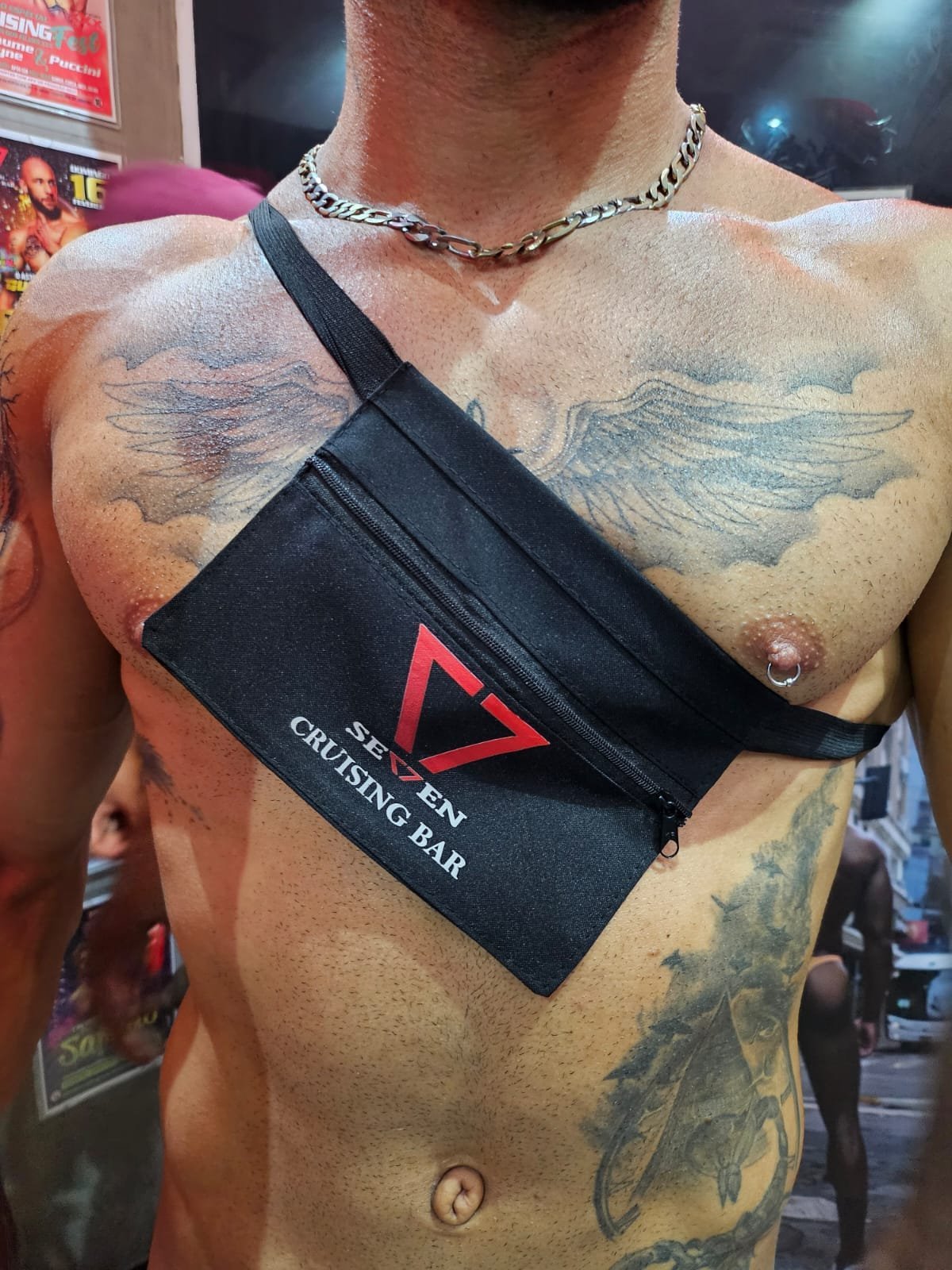
- Monday07.09.20260:00Monday: SevenMenBr ManMen OnlyVisit the Seven Cruising Bar in Brazil for the weekly SevenMenBr Man event
Tuesday08.09.2026
Kink & Fetish
- Tuesday08.09.202610:00Tuesday: Total NAKED DayMen OnlyVisit Seven Cruising Bar in Brazil for a special total naked day
Thursday10.09.2026
Kink & Fetish
- Thursday03.09.202610:00Thursday: Military and Muscular Men!Men OnlyJoin the military and muscular men themed night in Brazil
Monday14.09.2026
Kink & Fetish
- Monday07.09.20260:00Monday: SevenMenBr ManMen OnlyVisit the Seven Cruising Bar in Brazil for the weekly SevenMenBr Man event
Tuesday15.09.2026
Kink & Fetish
- Tuesday08.09.202610:00Tuesday: Total NAKED DayMen OnlyVisit Seven Cruising Bar in Brazil for a special total naked day
Thursday17.09.2026
Kink & Fetish
- Thursday03.09.202610:00Thursday: Military and Muscular Men!Men OnlyJoin the military and muscular men themed night in Brazil
Monday21.09.2026
Kink & Fetish
- Monday07.09.20260:00Monday: SevenMenBr ManMen OnlyVisit the Seven Cruising Bar in Brazil for the weekly SevenMenBr Man event
Tuesday22.09.2026
Kink & Fetish
- Tuesday08.09.202610:00Tuesday: Total NAKED DayMen OnlyVisit Seven Cruising Bar in Brazil for a special total naked day
Thursday24.09.2026
Kink & Fetish
- Thursday03.09.202610:00Thursday: Military and Muscular Men!Men OnlyJoin the military and muscular men themed night in Brazil
Monday28.09.2026
Kink & Fetish
- Monday07.09.20260:00Monday: SevenMenBr ManMen OnlyVisit the Seven Cruising Bar in Brazil for the weekly SevenMenBr Man event
Tuesday29.09.2026
Kink & Fetish
- Tuesday08.09.202610:00Tuesday: Total NAKED DayMen OnlyVisit Seven Cruising Bar in Brazil for a special total naked day
Thursday01.10.2026
Kink & Fetish
- Thursday03.09.202610:00Thursday: Military and Muscular Men!Men OnlyJoin the military and muscular men themed night in Brazil
Monday05.10.2026
Kink & Fetish
- Monday07.09.20260:00Monday: SevenMenBr ManMen OnlyVisit the Seven Cruising Bar in Brazil for the weekly SevenMenBr Man event
Tuesday06.10.2026
Kink & Fetish
- Tuesday08.09.202610:00Tuesday: Total NAKED DayMen OnlyVisit Seven Cruising Bar in Brazil for a special total naked day
Thursday08.10.2026
Kink & Fetish
- Thursday03.09.202610:00Thursday: Military and Muscular Men!Men OnlyJoin the military and muscular men themed night in Brazil
Monday12.10.2026
Kink & Fetish
- Monday07.09.20260:00Monday: SevenMenBr ManMen OnlyVisit the Seven Cruising Bar in Brazil for the weekly SevenMenBr Man event
Tuesday13.10.2026
Kink & Fetish
- Tuesday08.09.202610:00Tuesday: Total NAKED DayMen OnlyVisit Seven Cruising Bar in Brazil for a special total naked day
LGBTQ+ Travel Guide: Brazil
Legal Situation & Safety for LGBTQ+ Travellers
Brazil has one of Latin America's most progressive legal frameworks for LGBTQ+ rights, largely shaped by landmark Supreme Court rulings rather than legislation. Homosexuality has been effectively legal since 1830. Same-sex marriage was recognised nationally from 2013 following a resolution of the National Council of Justice. In a landmark 2019 ruling, the Supreme Court declared that discrimination based on sexual orientation and gender identity constitutes a crime equivalent to racism — punishable by up to five years in prison. Legal gender change by self-identification (without surgery) has been available since 2018. However, 2025 has brought significant controversy around trans healthcare: the Federal Council of Medicine issued a resolution in April 2025 banning gender-affirming care for minors under 18, though this was challenged in courts and the situation remains legally contested. Brazil also presents a paradox of being simultaneously one of the world's most LGBTQ+-progressive countries legally, while recording some of the world's highest rates of anti-LGBTQ+ violence — particularly against transgender women.
Overview of Legal Rights (Sources: Equaldex, Wikipedia)
| Topic | Status |
|---|---|
| Homosexuality | Legal since 1830 — equal age of consent since decriminalisation |
| Same-sex marriage | Legal since 16 May 2013 (National Council of Justice resolution) |
| Adoption by same-sex couples | Fully legal since 2013 — same rights as opposite-sex couples |
| Anti-discrimination protections | Criminalised since June 2019 — Supreme Court ruling equates LGBTphobia to racism (up to 5 years imprisonment) |
| Hate crime protections | Covered under the 2019 LGBTphobia ruling — enforcement varies significantly by region |
| Right to change legal gender | Legal by self-identification since 1 March 2018 — no surgery or medical report required |
| Recognition of non-binary identities | Partial — non-binary/X gender marker available on ID since 2024; Superior Court of Justice set precedent in May 2025; not yet uniformly available nationwide |
| Gender-affirming care (adults) | Legal and available through public healthcare (SUS) |
| Gender-affirming care (minors) | Contested — Federal Council of Medicine banned under-18 access in Apr 2025; blocked by federal court Jul 2025; reinstated by Supreme Court Oct 2025; full plenary review pending as of March 2026 |
| Conversion therapy | Banned since 1999 (Federal Council of Psychology resolution) |
| Serving openly in the military | Legal |
| Censorship of LGBTQ+ topics | Federal level: no censorship. State level: some states have passed or attempted restrictions on LGBTQ+ content in schools; most struck down by Supreme Court. Nov 2025: neutral-gender language banned on federal documents. |
Safety & Social Attitudes
Brazil presents a deeply paradoxical safety picture for LGBTQ+ travellers. In São Paulo, Rio de Janeiro, and Salvador, same-sex couples are generally visible and openly affectionate in established LGBTQ+ areas without concern. Yet Brazil consistently records among the world's highest rates of anti-LGBTQ+ murders — particularly targeting transgender women. The reality is heavily region- and neighbourhood-dependent: the gay zones of Ipanema and Frei Caneca are safe and celebratory; rural areas and conservative urban peripheries can be dangerous. General urban safety awareness applies across Brazil regardless of sexual orientation.
Key Organisations & Support
- Grupo Gay da Bahia (GGB): Brazil's oldest and largest LGBTQ+ organisation, founded in Salvador in 1980 — publishes Brazil's annual LGBTQ+ homicide report
- APOGLBT-SP: Organiser of the São Paulo Pride Parade — the world's largest Pride event
- Museu da Diversidade Sexual (São Paulo): The first LGBTQ+ museum in Latin America — free admission; a landmark cultural institution
- Disque 100: Brazil's national human rights hotline — reports of LGBTphobic discrimination and violence can be filed here
- Emergency: 190 (Police) / 192 (Ambulance)
Entry & Practical Information
- As of early 2025, the USA requires a visa to enter Brazil (reciprocity measure introduced January 2025). EU, UK, Canadian, and Australian citizens can currently enter visa-free for stays up to 90 days — check current requirements for your nationality before travelling as policies may have changed.
- Currency is the Brazilian Real (BRL). Card payments are widely accepted in cities; cash is useful for markets, street food, and smaller venues. PIX (instant payment) is ubiquitous in Brazil.
- The official language is Portuguese (Brazilian Portuguese). English is spoken in tourist areas of São Paulo and Rio but limited elsewhere — basic Portuguese phrases are very helpful.
- Same-sex foreign marriages are fully recognised under Brazilian law.
- Brazil is the world's fifth-largest country — internal flights are essential for covering longer distances.
LGBTQ+ Highlights: Cities, Prides & Events
Brazil hosts over 300 Pride events annually — more than any other country — and its major cities offer some of the world's most extraordinary queer experiences. The combination of São Paulo Pride (world's largest), Rio's Carnival and Copacabana Pride, and Salvador's Afro-Brazilian queer culture creates an unrivalled calendar of LGBTQ+ events.
São Paulo — World Capital of Pride
São Paulo is Latin America's megacity — the largest city in the Southern Hemisphere, a global gastronomy capital, and home to what is widely recognised as the world's largest Pride parade. The LGBTQ+ scene is enormous and spread across multiple neighbourhoods, with the greatest concentration along Frei Caneca Street and in the areas of Jardins, Pinheiros, and Largo do Arouche.
- Frei Caneca Street (Consolação/Jardins): São Paulo's "gay street" — nearly 100 LGBTQ+-friendly bars, saunas, clubs, cafés, and stores in a concentrated area; the heart of the city's queer scene day and night
- Largo do Arouche / Centro: The original gay neighbourhood — grittier and more historic than Frei Caneca, often compared to New York's West Village
- Pinheiros: A hip, mixed neighbourhood with queer-friendly bars and cafés including Galeria Café — popular with a younger, artsy crowd
- The Week: One of the largest gay clubs in Latin America — legendary parties with international DJs, two dance floors, outdoor pool, and a devoted global following
- Museu da Diversidade Sexual: The first LGBTQ+ museum in Latin America — telling the history of Brazil's queer community and its activism; free admission
- São Paulo is the only South American city in the Rainbow Cities Network — a global network of LGBTQ+-inclusive municipalities
Rio de Janeiro — Carnival City, Iconic Beaches
Rio de Janeiro is Brazil's most internationally recognisable city — and one of the world's great LGBTQ+ destinations. The city was classified as the world's best LGBTQ+ destination in 2009 and the most "sexy city" for LGBTQ+ people in 2010 by US travel media. Rio's LGBTQ+ scene combines iconic beach culture with legendary nightlife and the extraordinary spectacle of Carnival.
- Ipanema Beach — Posto 9 ("Farme de Amoedo" / "Barbie Land"): Rio's most famous gay beach section — marked by a rainbow flag at Posto 9, a daily gathering place for the LGBTQ+ community and one of the most joyful and open queer spaces in the world
- Copacabana Beach — Praia de Bolsa: The bear and transgender community beach section, near the Copacabana Palace Hotel
- Ipanema & Leblon: Rio's most sophisticated and LGBTQ+-welcoming neighbourhoods for bars, restaurants, and nightlife
- The Week Rio: Rio's branch of the legendary gay superclub — one of the largest and most celebrated gay venues in Latin America
- Buraco da Lacraia: Beloved local gay bar with spectacular over-the-top drag performances and carnival-like atmosphere; an authentically Brazilian experience
- La Cueva: One of Rio's oldest gay bars, operating since the 1960s — retro charm and affordable drinks in a friendly, social setting
Salvador de Bahia — Afro-Brazilian Queer Capital
Salvador, the capital of Bahia in northeast Brazil, is the heartbeat of Afro-Brazilian culture and one of Brazil's most important LGBTQ+ cities. The city reportedly hosts more individual Pride parades than any other city in Brazil — over 40 per year in various neighbourhoods — reflecting its deeply embedded queer culture. Bahia's blend of African, indigenous, and Portuguese heritage creates a uniquely rich and expressive cultural environment that is historically welcoming to gender-diverse identities.
- Barra neighbourhood: The most popular area for gay men in Salvador — beaches, bars, and a relaxed, open atmosphere on the waterfront
- Porto da Barra beach: Salvador's most popular and LGBTQ+-welcoming beach, set in a scenic cove with calm waters
- Grupo Gay da Bahia (GGB): Brazil's oldest LGBTQ+ organisation, based in Salvador — an important cultural institution and the source of Brazil's annual LGBTQ+ homicide statistics
- Salvador's Carnival (February/March) rivals Rio's in scale and energy — with strong LGBTQ+ presence throughout the celebrations
More Cities & Events
- Belo Horizonte: Brazil's third-largest city — a growing LGBTQ+ scene with annual Pride and a culturally rich city known for its restaurants and nightlife
- Florianópolis: The beach capital of southern Brazil — a popular LGBTQ+ destination with beautiful beaches, a relaxed coastal lifestyle, and a Pride festival
- Recife & Olinda: Northeast Brazil's cultural capitals — vibrant Carnival traditions and a growing LGBTQ+ scene, with Recife Pride among Brazil's largest regional events
- Fortaleza: Northeastern beach city with year-round warm weather, a growing LGBTQ+ scene, and a major New Year's Eve beach party tradition
- New Year's Eve on Copacabana Beach (Rio): One of the world's greatest New Year's celebrations — millions dress in white on Copacabana Beach with fireworks over the bay; a major LGBTQ+ gathering point
- Fernando de Noronha LGBTQ+ Festival (August): An LGBTQ+ festival on Brazil's paradise archipelago — one of the world's most extraordinary natural environments
General Travel Highlights: Brazil
Brazil is the world's fifth-largest country and arguably its most naturally spectacular — home to the Amazon rainforest, the world's greatest beach city, one of the planet's most biodiverse ecosystems, and a culture of music, food, and celebration like no other.
Rio de Janeiro — Cidade Maravilhosa
- Christ the Redeemer (Cristo Redentor): One of the world's most iconic monuments — the 38-metre Art Deco statue atop Corcovado mountain, with breathtaking 360° views over the city, Guanabara Bay, and the Atlantic
- Sugarloaf Mountain (Pão de Açúcar): The definitive Rio experience — cable car to the summit with stunning views over the city, bay, and beaches
- Ipanema, Copacabana & Leblon beaches: The world's most famous urban beaches — spectacular settings for sunbathing, people-watching, and the daily social ritual of beach culture
- Santa Teresa: Rio's bohemian hilltop neighbourhood — colonial architecture, artist studios, the Selarón Steps (famous mosaic staircase), and a village atmosphere above the city
- Lapa Arches & nightlife: Rio's historic arched aqueduct and the surrounding samba clubs and street parties — the heartbeat of Rio's nightlife culture
São Paulo — Cultural Powerhouse
- Paulistano gastronomy: São Paulo is Latin America's culinary capital — boasting some of the world's best Japanese restaurants outside Japan, outstanding Italian, Lebanese, and Brazilian cuisine, and a relentlessly innovative food scene
- Avenida Paulista: São Paulo's iconic central boulevard — lined with museums (MASP, Instituto Moreira Salles), cultural centres, and the pulse of the city's commercial and cultural life
- MASP (Museu de Arte de São Paulo): One of Latin America's great art museums — housed in a striking glass-and-concrete structure by architect Lina Bo Bardi, suspended above Avenida Paulista on distinctive red concrete pillars
- Vila Madalena: São Paulo's bohemian neighbourhood — famous for the Beco do Batman (Batman Alley) street art, independent bars, and the city's most creative cultural scene
- Pinacoteca do Estado: Brazil's oldest art museum — housed in a magnificent renovated 19th-century building; the finest collection of Brazilian art
Natural Wonders
- Amazon Rainforest: The world's largest tropical rainforest — accessible via Manaus (gateway to the Amazon) or Belém; river cruises and jungle lodges offer extraordinary wildlife and ecological experiences
- Iguazu Falls (Foz do Iguaçu): The world's most spectacular waterfall system — 275 falls stretching nearly 3 km on the border with Argentina; a UNESCO World Heritage Site and one of the planet's great natural wonders
- Lençóis Maranhenses National Park: One of Earth's most surreal landscapes — vast white sand dunes punctuated by brilliant turquoise freshwater lagoons, in the northeast of Brazil
- Pantanal: The world's largest tropical wetland — one of the best wildlife-watching destinations on Earth, with exceptional concentrations of jaguars, caimans, capybaras, giant otters, and hundreds of bird species
- Fernando de Noronha: Brazil's UNESCO-listed Atlantic island paradise — pristine beaches, crystal-clear waters, and exceptional diving and snorkelling in a protected marine national park
- Chapada Diamantina (Bahia): Dramatic highland plateau with waterfalls, caves, and canyons — increasingly popular trekking destination in northeast Brazil
Culture, Music & Food
- Carnival: Brazil's defining cultural event — celebrated in Rio, Salvador, Recife/Olinda, São Paulo, and hundreds of other cities with samba, frevo, axé, and axé-music; an unmissable experience
- Samba, bossa nova, forró & baile funk: Brazil's extraordinary musical diversity — from the elegant melancholy of bossa nova to the pulsating energy of baile funk in Rio's favela parties
- Caipirinhas & churrasco: Brazil's iconic cocktail (cachaça, lime, sugar) and barbecue tradition; both are central to Brazilian social life
- Açaí, pão de queijo, moqueca: Brazil's extraordinary regional cuisines — from Amazonian superfoods to the rich seafood stews of Bahia and the cheese bread of Minas Gerais
Practical Travel Tips
- Getting there: Main international airports in São Paulo (GRU / Guarulhos — South America's busiest airport), Rio de Janeiro (GIG / Galeão), and Belo Horizonte (CNF / Confins). Connections from Europe, North America, and across Latin America
- Visa: US citizens now require a visa (since January 2025). EU, UK, Canadian, and Australian citizens currently visa-free up to 90 days — check current requirements before booking
- Getting around: Domestic flights (LATAM, Gol, Azul) are essential for Brazil's vast distances. Rideshare apps (Uber, 99) are safe and widely used in cities. Exercise caution with unlicensed taxis
- Best time to visit: Rio/Salvador: December–March (summer, Carnival). São Paulo: year-round (June for Pride). Amazon: May–September (dry season). Pantanal: July–October (dry season, best wildlife). Iguazu Falls: year-round
- Safety: Brazil has significant urban crime. Use common sense: avoid displaying phones and valuables, use apps rather than street taxis, avoid isolated areas at night, and research your specific neighbourhood before visiting
- Language: Brazilian Portuguese — English spoken in tourist areas of São Paulo and Rio; elsewhere, basic Portuguese is very helpful
Sources: Equaldex – LGBT Rights in Brazil (equaldex.com/region/brazil) · Wikipedia – LGBTQ rights in Brazil · IGLTA Brazil Gay Travel Guide (iglta.org) · Misterb&b – São Paulo Gay Pride Guide · Out Adventures – Gay Brazil · VamosGay – São Paulo Gay Guide · Rio Cultural Secrets – LGBTQ Travel Guide to Rio · Next Stop Brazil – São Paulo Pride 2025 · As of March 2026
Change location: